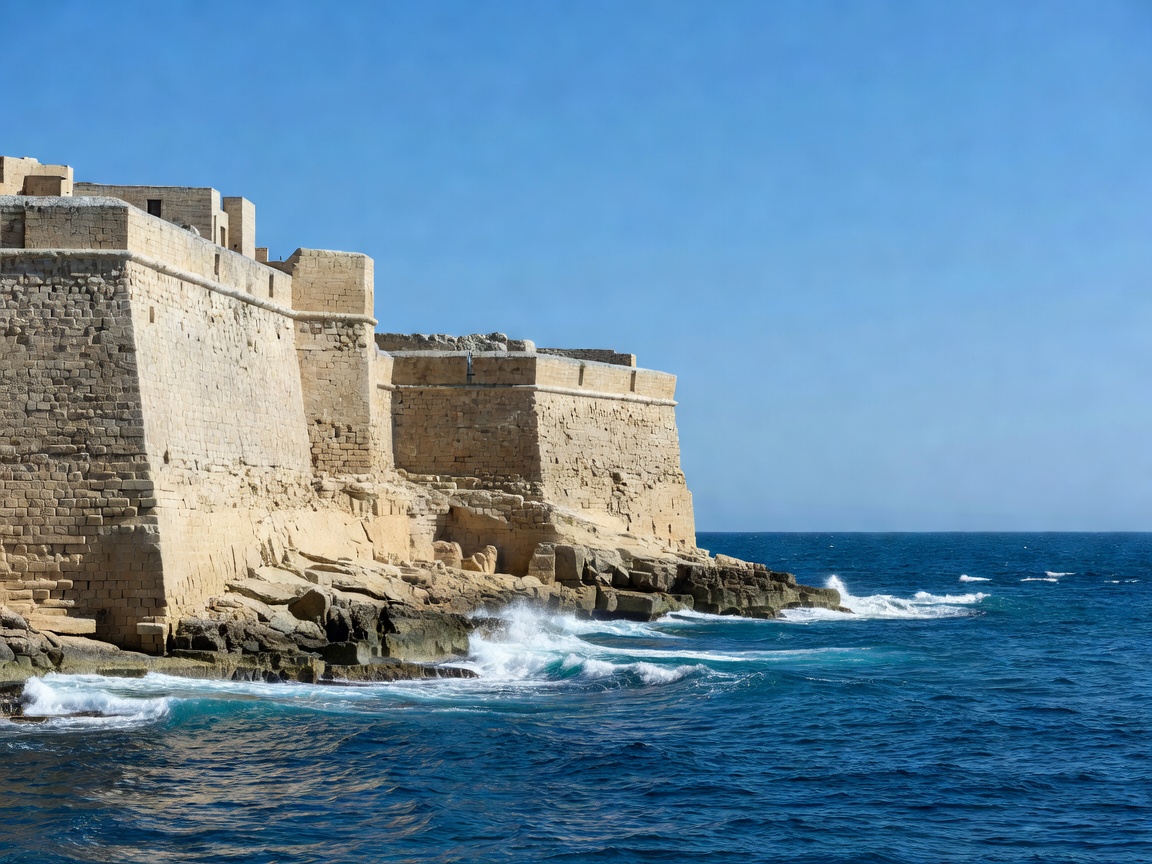
Occupying Gallows Point at the eastern mouth of Valletta's Grand Harbour, Fort Ricasoli was commissioned in 1670 under Grand Master Nicholas Cotoner and designed by the papal military architect Count Antonio Maurizio Valperga. Financed substantially by the Florentine Knight Fra Giovanni Francesco Ricasoli, the fortress was engineered to close the sea entry against hostile fleets alongside Fort St. Elmo.
Baroque Engineering & Bastion Layout
Fort Ricasoli covers over 300,000 square meters of coastal peninsula. Its land front consists of a powerful bastioned trace featuring two semi-bastions (St. Nicholas and St. John) connected by a central curtain wall, backed by a deep dry ditch cut into bedrock and reinforced with outer ravelins. The seaward batteries incorporated heavy gun casemates aligned directly at water level.
The Froberg Mutiny of 1807
In April 1807, Fort Ricasoli was the site of the infamous Froberg Mutiny, when foreign recruits in the British Army seized the magazine following disputes over recruitment conditions. The mutineers held the fort for five days before British artillery breached the gates, leading to a dramatic explosion of the gunpowder magazine.
- Construction Dates: 1670–1698
- Location: Gallows Point, Kalkara, Malta
- Chief Engineers: Antonio Maurizio Valperga, Mederico Blondel
- Current Use: Film production location & Heritage Malta restoration project
World War II & Contemporary Structural Conservation
During World War II, Fort Ricasoli was armed with heavy 6-inch coastal defense guns and searchlight emplacements. In April 1942, Axis dive-bombers destroyed the monumental Baroque gatehouse and governor's quarters. Today, Heritage Malta and structural engineers are executing critical cliff stabilization and masonry conservation to protect the fort's ocean-facing bastions from wave action and erosion.