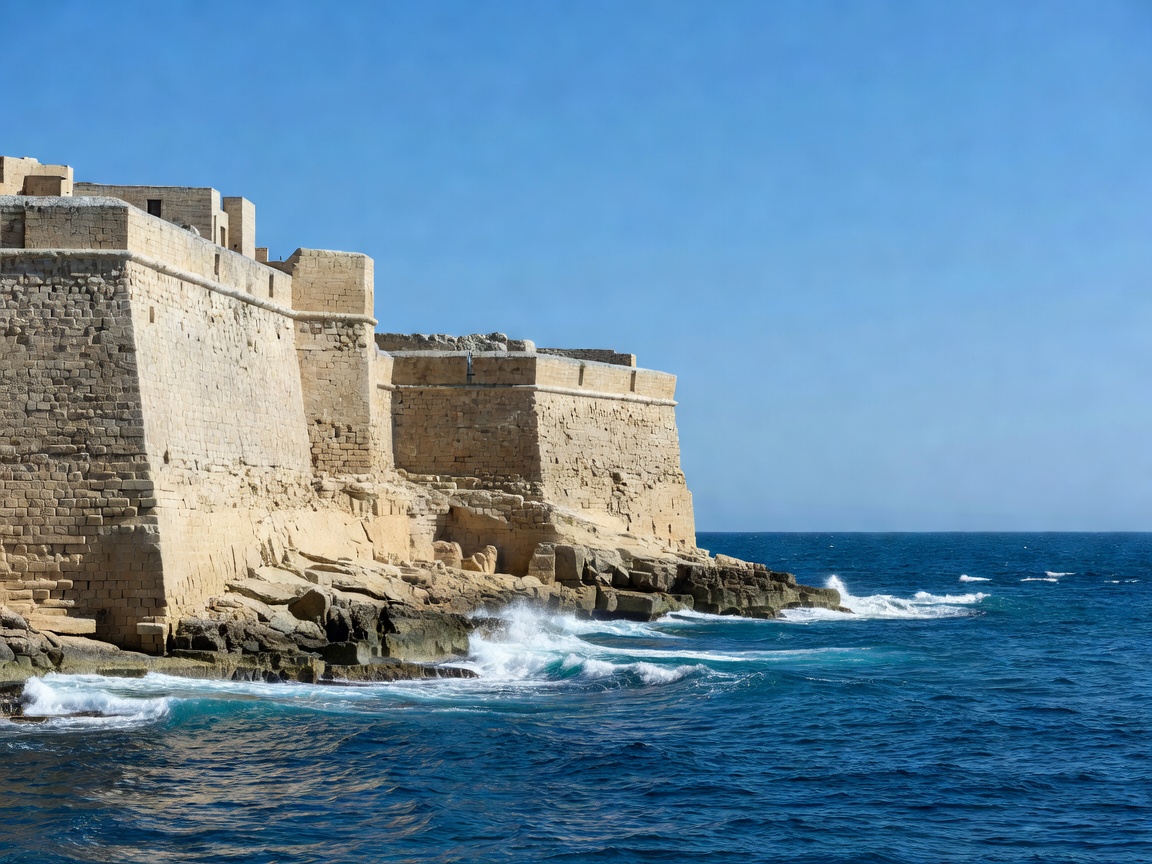
Positioned at the tip of the Sciberras Peninsula, Fort St. Elmo holds an extraordinary position in military architecture. Before the construction of Valletta, the seaward approach to Malta was anchored solely by this star-shaped fort, commissioned by Grand Master Juan de Homedes in 1552 following devastating corsair raids on the Maltese islands.
Architectural Blueprint & Star Fort Design
Designed by Italian military engineer Pietro Prato, St. Elmo was crafted around a traditional Italianate star-fort design (trace italienne). This structure featured low, thick limestone ramparts specifically intended to absorb cannonfire rather than deflect it, with cavalier towers providing overlapping fields of defensive crossfire across both Grand Harbour and Marsamxett Harbour.
"The garrison at St. Elmo fought not for victory, but for every single hour that allowed the rest of the island to reinforce its bastions."
The Siege of 1565
When the Ottoman armada under Mustafa Pasha arrived in May 1565, Ottoman strategists estimated Fort St. Elmo would fall within three days. Instead, a garrison of fewer than 1,500 Knights of St. John and Maltese militia held out for over four weeks under continuous artillery bombardment. Over 18,000 cannonballs were fired into its limestone walls.
- Location: Sciberras Peninsula, Valletta, Malta
- Material: Globigerina Limestone
- Key Architects: Pietro Prato, Francesco Laparelli
- Current Status: Heritage Site & National War Museum
Modern Architectural Preservation
Today, Fort St. Elmo has undergone meticulous restoration work, repairing the eroded limestone masonry and preserving the subterranean magazines, chapel, and cavalier platforms for historical study.