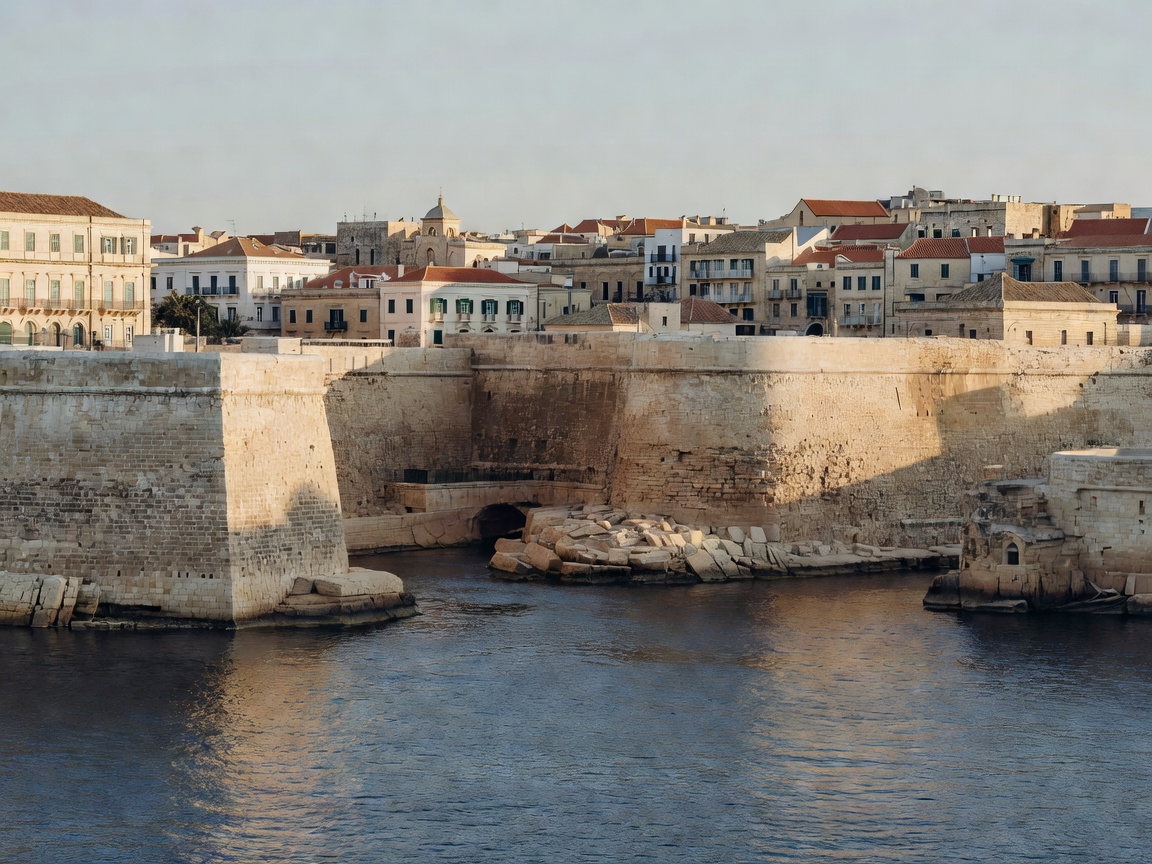
Perched dramatically on the rocky promontory of Birgu (Vittoriosa) overlooking the Grand Harbour, Fort St. Angelo represents the historical nerve center of Maltese maritime power. Originating as the medieval Castrum Maris (Castle by the Sea), it was reconstructed by the Order of Saint John upon their arrival in 1530 to serve as the residence of the Grand Master and the strategic anchor of harbor defenses.
Medieval Origins & Hospitaller Transformation
Archaeological records indicate that the promontory was fortified since classical antiquity, with prehistoric and Phoenician temple foundations beneath the medieval stone ramparts. When Grand Master Philippe Villiers de L'Isle-Adam selected Birgu as the Order's capital, military engineers cut a massive seawater ditch separating the fort from the town and erected multi-tiered gun platforms commanding the harbor entrance.
"Fort St. Angelo was the anchor stone of Birgu; as long as its guns covered the water basin, no enemy fleet could hold the Grand Harbour."
The Great Siege of 1565 Command Post
During the Great Siege of 1565, Grand Master Jean Parisot de Valette established his war council within the upper quarters of Fort St. Angelo. From its cavalier platforms, Valette directed troops across Birgu, Senglea, and Fort St. Elmo, communicating via boat convoys across the harbor. The heavy battery on the low seaward platform devastated Ottoman amphibious assaults on Senglea Point.
- Location: Birgu (Vittoriosa), Grand Harbour, Malta
- Primary Material: Globigerina and Coralline Limestone
- Naval Designation: HMS St Angelo (Royal Navy Shore Establishment 1912–1979)
- Heritage Status: UNESCO World Heritage Tentative Site / National Monument
British Era & Modern Heritage Preservation
In the 19th century, the British Admiralty commissioned major modifications, adding heavy 80-ton rifled muzzle-loading guns to the upper bastions. In 1912, the fort was formally commissioned into the Royal Navy as HMS St Angelo, serving as the Mediterranean Fleet depot ship during both World Wars. Today, the upper palace is occupied by the Sovereign Military Order of Malta under diplomatic treaty, while the bastions and lower batteries are preserved as a public historic site by Heritage Malta.