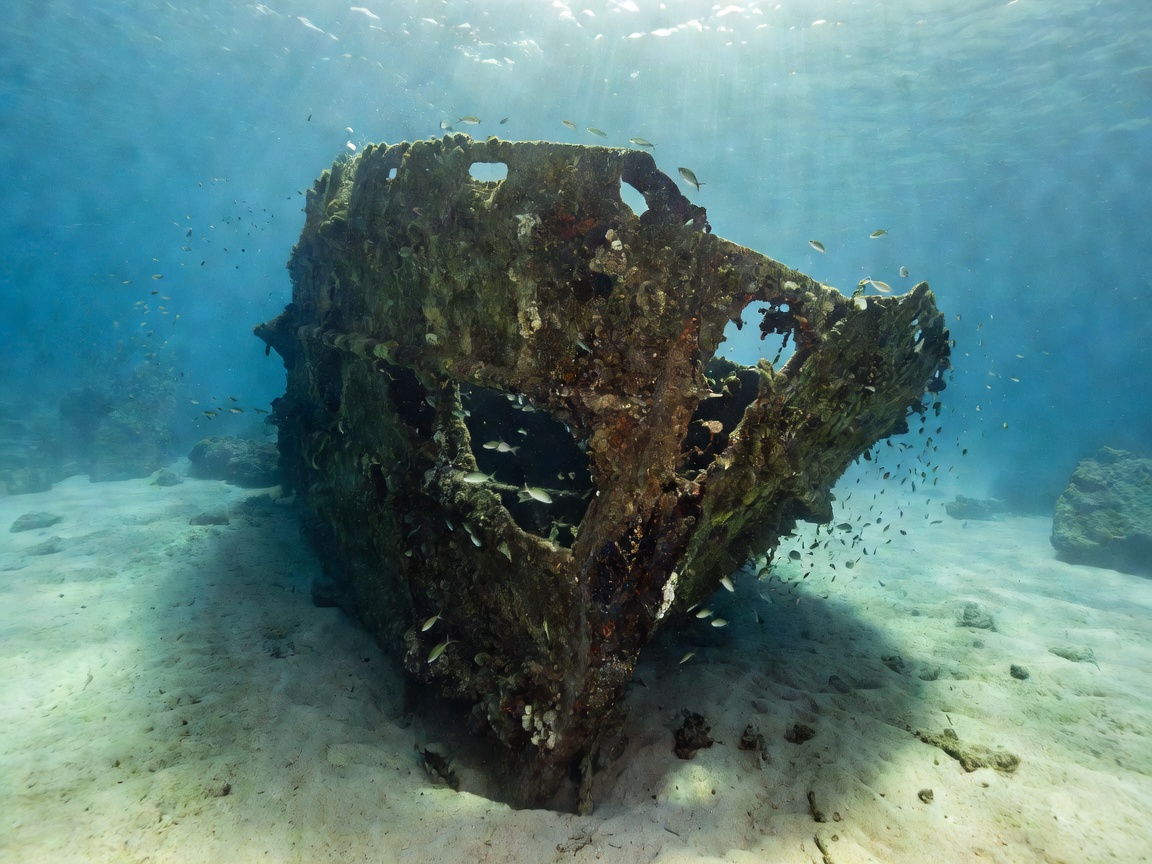
HMS Maori (F24) was one of sixteen Tribal-class destroyers built for the Royal Navy in the late 1930s. Equipped with twin 4.7-inch naval guns and torpedo tubes, Maori was active in major Mediterranean battles, Mediterranean convoy escorts, and the North Atlantic pursuit of the German battleship Bismarck.
The Sinking in Marsamxett Harbour
On the night of February 12, 1942, while moored at Grand Harbour, HMS Maori was struck by a bomb in her engine room during a Luftwaffe air raid. The explosion set off her magazine ammunition, causing her to sink at her moorings. In 1945, her bow section was towed out to deep water, while the forward hull and gun mounts were relocated off Fort St. Elmo in Marsamxett Harbour.
- Depth Range: 12 to 16 meters
- Visibility: 15 to 30 meters
- Current: Minimal to Light
- Key Features: Gun mount ring, forward superstructure, marine growth encrustations
Conservation & Marine Life Ecosystem
Today, HMS Maori is one of the most accessible marine archaeological sites in Europe. Encrusted with sponges, anemones, and tube worms, the steel hull provides an artificial reef ecosystem supporting cardinalfish, octopus, and sea bream.