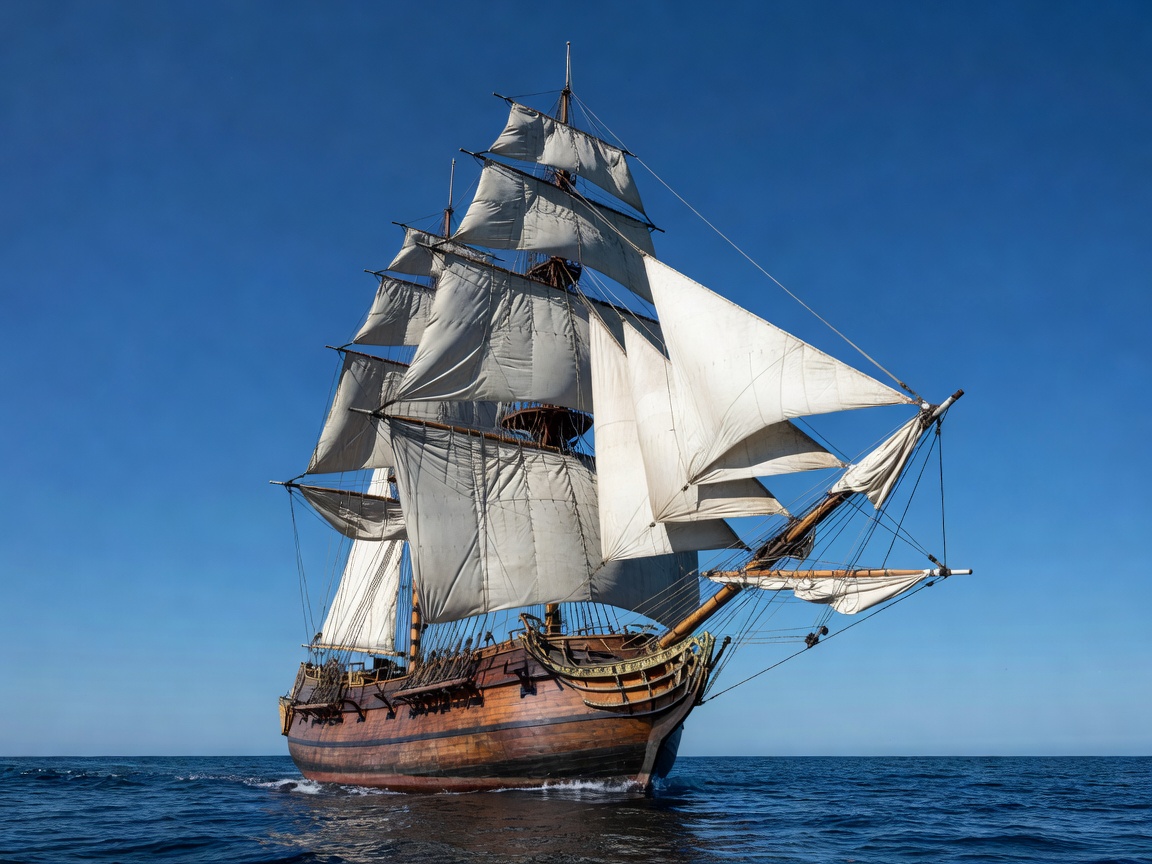
During the 17th and 18th centuries, Malta became a primary center for official privateering in the Mediterranean under the Corso regulations enforced by the Tribunal of the Armaments (*Tribunale degli Armamenti*). To pursue fast Barbary raiders, Maltese shipbuilders developed high-speed hybrid vessels—most notably the **xebec**.
Hull Engineering & Sail Plan
The Maltese xebec featured a long, narrow hull with a sharp, pointed bow and an overhanging stern. It mounted three masts fitted with large lateen sails for superior speed when sailing close to the wind. In calm weather, the vessel could deploy 12 to 24 pairs of oars, allowing it to maneuver around square-rigged warships that were immobilized by lack of wind.
- Overall Length: 35 to 42 meters
- Rigging Type: Triple Lateen (convertible to square rigging for trans-Atlantic voyages)
- Armament: 16 to 24 carriage cannons plus swivel guns
- Primary Base: Grand Harbour Arsenals, Valletta & Senglea
Naval Patrols & Corsair Legacy
Commanded by Maltese captains and Knights Hospitaller sea officers, these privateer fleets patrolled the waters between Sicily, the Levant, and North Africa. Their speed and shallow draft made them ideal for surprise maneuvers near coastal reefs and harbor approaches.